Posts

Showing posts with the label linux

OpenShift

Image
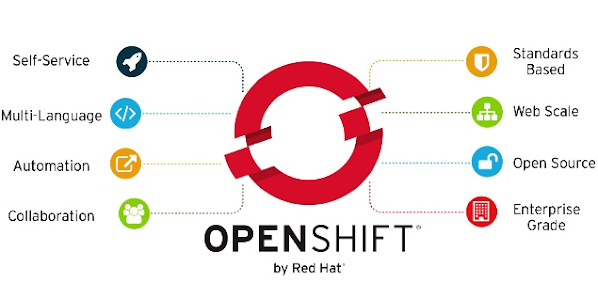
 What is OpenShift? OpenShift is an   open source   hybrid cloud   application   Platform as a Service   (PaaS) developed by Red Hat . Red Hat also offers a version of OpenShift for   private clouds   called OpenShift Enterprise .  At its core, OpenShift is an open-source tool that leverages the Kubernetes platform to manage  Docker containers  for consistent: Workload management Self-monitoring Centralized policy provisioning     With  OpenShift, developers can deploy containerized applications in an Integrated Development Environment (IDE), while employing Kubernetes to manage them. OpenShift uses Red Hat Enterprise Linux  (RHEL) and its  SELinux  (Security-Enhanced Linux) subsystem as its foundation. OpenShift supports multiple languages for ease of development, including Java, PHP, Python, Ruby, Perl and Node.js. Advantages : OpenShift is available both as:...
Integration of LVM with Hadoop

Image
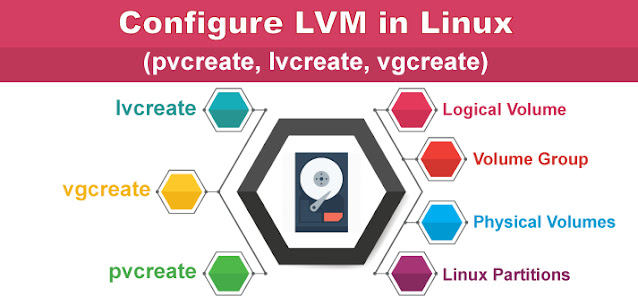
In this blog, we are going to do two things: 🔅 Integrating LVM with Hadoop and providing Elasticity to DataNode Storage 🔅Increase or Decrease the Size of Static Partition in Linux. LVM (Logical Volume Manager) Logical volume management (LVM) is a form of storage virtualization  that offers system administrators a more flexible approach to managing disk storage space than traditional partitioning. This type of   virtualization  tool is located within the device driver  stack on the operating system. It works by chunking the physical volumes (PVs) into physical extents (PEs). The PEs are mapped onto logical extents (LEs) which are then pooled into volume groups (VGs). These groups are linked together into logical volumes (LVs) that act as virtual disk partitions  and that can be managed as such by using LVM. LVM is an amazing technique using which you can  increase the storage of device on the fly , without loosing data, without shutting down the syste...