Posts

Showing posts with the label CI/CD

OpenShift

Image
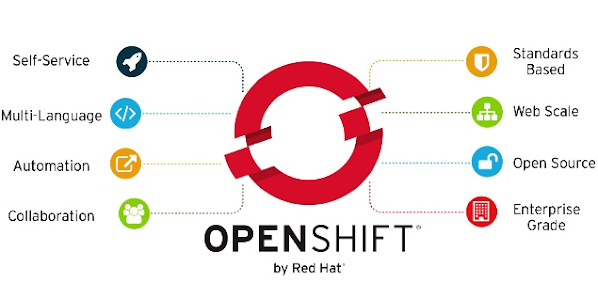
 What is OpenShift? OpenShift is an   open source   hybrid cloud   application   Platform as a Service   (PaaS) developed by Red Hat . Red Hat also offers a version of OpenShift for   private clouds   called OpenShift Enterprise .  At its core, OpenShift is an open-source tool that leverages the Kubernetes platform to manage  Docker containers  for consistent: Workload management Self-monitoring Centralized policy provisioning     With  OpenShift, developers can deploy containerized applications in an Integrated Development Environment (IDE), while employing Kubernetes to manage them. OpenShift uses Red Hat Enterprise Linux  (RHEL) and its  SELinux  (Security-Enhanced Linux) subsystem as its foundation. OpenShift supports multiple languages for ease of development, including Java, PHP, Python, Ruby, Perl and Node.js. Advantages : OpenShift is available both as:...

Jenkins

Image
     Jenkins Jenkins is an open source automation server written in Java. It is used to continuously build and test software projects, enabling developers to set up a CI/CD environment. It also supports version control tools like Subversion, Git, Mercurial, and Maven. Jenkins is well-documented and extremely extensible, with a rich ecosystem of plugins and integrations. For that reason, it excels when used in large projects that require lots of customization. While Jenkins itself is free, it must be run on a server which will need attention, updates, and maintenance. The above diagram shows the Jenkins pipeline. This includes continuous integration and continuous delivery of jobs namely the Build, Deploy, Test , and Release . It is done as these jobs are interdependent and forms the pipeline in a particular format. This involves continuous automation from one stage to another to bring down the cost, time, and number of iterations without affecting the quality. Why We Need...