Posts

Showing posts with the label container

OpenShift

Image
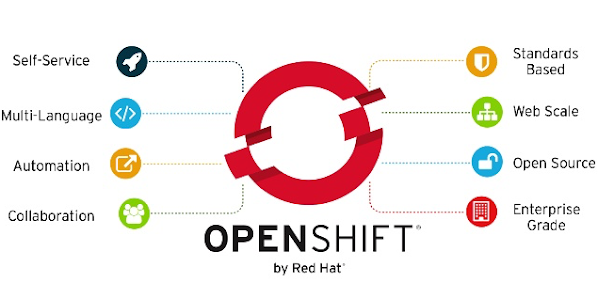
 What is OpenShift? OpenShift is an   open source   hybrid cloud   application   Platform as a Service   (PaaS) developed by Red Hat . Red Hat also offers a version of OpenShift for   private clouds   called OpenShift Enterprise .  At its core, OpenShift is an open-source tool that leverages the Kubernetes platform to manage  Docker containers  for consistent: Workload management Self-monitoring Centralized policy provisioning     With  OpenShift, developers can deploy containerized applications in an Integrated Development Environment (IDE), while employing Kubernetes to manage them. OpenShift uses Red Hat Enterprise Linux  (RHEL) and its  SELinux  (Security-Enhanced Linux) subsystem as its foundation. OpenShift supports multiple languages for ease of development, including Java, PHP, Python, Ruby, Perl and Node.js. Advantages : OpenShift is available both as:...
Python Code on Docker Container

Image
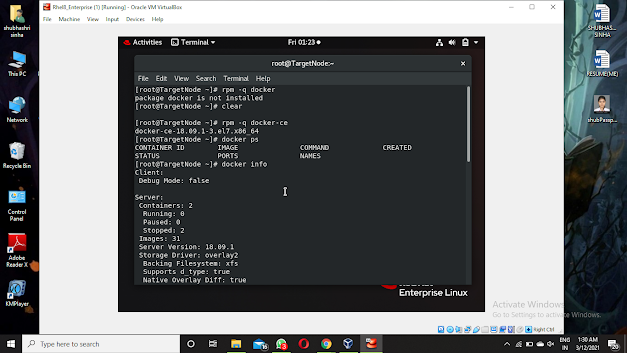
 In this blog, we are going to  Set up Python Interpreter and running Python Code on Docker Container: Step 1 : Install docker-ce on Linux OS :  Step2 : Run a container of image - centos:latest.  Step4 : Install python on that container :  Step 4 : Run python commands : We successfully  Set up Python Interpreter and run Python Code on Docker Container: Hope you liked my blog :)

Azure Kubernetes Service (AKS)

Image
Before knowing about what is Azure Kubernetes Service (AKS), first we need to know what's kubernetes.  WHAT IS KUBERNETES ? Kubernetes is a popular open source platform for  container orchestration  — that is, for the management of applications built out of multiple, largely self-contained runtimes called  containers. Kubernetes is a  cluster management system  for managing containerized applications across multiple hosts, providing mechanisms for  deployment, maintenance, and scaling  of applications. It groups containers that make up an application into logical units for easy management and discovery. Azure Kubernetes Service (AKS) Azure Kubernetes Service (AKS) is a fully-managed service that allows you to run Kubernetes in Azure without having to manage your own Kubernetes clusters. Azure manages all the complex parts of running Kubernetes, and you can focus on your containers  Advanta ges : Pay only for the nodes (VMs) Easier cluste...

Expert Session on Kubernetes/ Openshift and it's Industrial usecase.

Image
  Before getting into industry, for sailing smoothly from academic to industry, it's very important have some knowledge about industry, how things works in industry, industrial use case. Just because of  Mr. Vimal Daga  sir and  Mrs. Preeti Daga  ma'am, I got this opportunity. On 01 March 2021  , they  arranged Industry Expert Practical Demo Session on Openshift/ kubernetes. Two of the best expert Redhatters of the industry  Mr. Amel Mathai  and  Mr. Daleep bais  they taught and showed use cases and industrial need. Introdution of speakers for the session, they both are Redhat experts :-  ➡️   ”Mr. Amel Mathai" (Technical Delivery Manager, Redhat Training ) "Mr. Amel is world's First Ansible certified professional and also working in Redhat from more than 12 years now." ➡️  ”Mr. Daleep Bais" (Senior Technical Instructor, RedHat Technologies) Mr. Daleep's consulting experience is primarily on Redhat's PaaS and sto...

Industrial Use Case of KUBERNETES

Image
WHAT IS KUBERNETES ? Kubernetes is a cluster management system for managing containerized applications across multiple hosts, providing mechanisms for deployment, maintenance, and scaling of applications. It groups containers that make up an application into logical units for easy management and discovery. Kubernetes builds upon years of experience at Google running production workloads at scale using a system called  Borg , combined with best-of-breed ideas and practices from the community. Google released Kubernetes in 2014, donated it as a seed technology for the founding of the  Cloud Native Computing Foundation  in 2015, and continues actively using and developing the project. Kubernetes Master The Kubernetes master is the primary control unit for the cluster. The master is responsible for managing and scheduling the workloads in addition to the networking and communications across the entire cluster. These are the components that run on the master: Etcd Storage ...

ANSIBLE : Apache Web Server on DOCKER Container using Ansible

Image
ANSIBLE Ansible  automates and simplifies repetitive, complex, and tedious operations . Everybody likes it because it brings  huge time savings  when we install packages or configure large numbers of servers. Its architecture is simple and effective. It works by connecting to your nodes and pushing small programs to them. These programs make the system comply with a desired state, and, when they have finished their tasks, they are deleted. Ansible  works over SSH  and doesn't require any daemons, special servers, or libraries to work. A text editor and a command line tool are usually enough to get your work done. You simply describe your infrastructure in a text file (INI) and then all the information about the desired state of these machines are organized in playbooks . It is able to gather node information (such as IP addresses or Operating System details) into so-called " facts ", which help with the selective and automated provisioning of different configura...