Posts

Showing posts with the label docker

OpenShift

Image
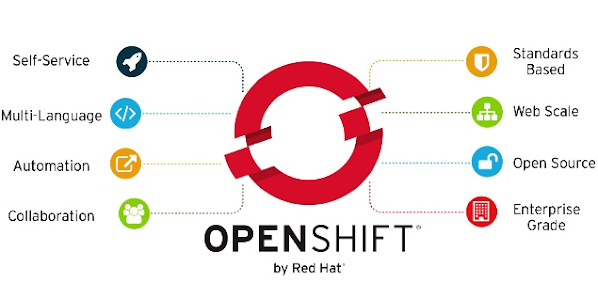
 What is OpenShift? OpenShift is an   open source   hybrid cloud   application   Platform as a Service   (PaaS) developed by Red Hat . Red Hat also offers a version of OpenShift for   private clouds   called OpenShift Enterprise .  At its core, OpenShift is an open-source tool that leverages the Kubernetes platform to manage  Docker containers  for consistent: Workload management Self-monitoring Centralized policy provisioning     With  OpenShift, developers can deploy containerized applications in an Integrated Development Environment (IDE), while employing Kubernetes to manage them. OpenShift uses Red Hat Enterprise Linux  (RHEL) and its  SELinux  (Security-Enhanced Linux) subsystem as its foundation. OpenShift supports multiple languages for ease of development, including Java, PHP, Python, Ruby, Perl and Node.js. Advantages : OpenShift is available both as:...
Python Code on Docker Container

Image
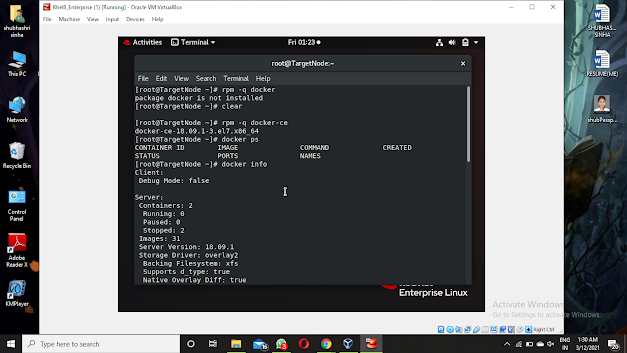
 In this blog, we are going to  Set up Python Interpreter and running Python Code on Docker Container: Step 1 : Install docker-ce on Linux OS :  Step2 : Run a container of image - centos:latest.  Step4 : Install python on that container :  Step 4 : Run python commands : We successfully  Set up Python Interpreter and run Python Code on Docker Container: Hope you liked my blog :)

Industrial Use Case of KUBERNETES

Image
WHAT IS KUBERNETES ? Kubernetes is a cluster management system for managing containerized applications across multiple hosts, providing mechanisms for deployment, maintenance, and scaling of applications. It groups containers that make up an application into logical units for easy management and discovery. Kubernetes builds upon years of experience at Google running production workloads at scale using a system called  Borg , combined with best-of-breed ideas and practices from the community. Google released Kubernetes in 2014, donated it as a seed technology for the founding of the  Cloud Native Computing Foundation  in 2015, and continues actively using and developing the project. Kubernetes Master The Kubernetes master is the primary control unit for the cluster. The master is responsible for managing and scheduling the workloads in addition to the networking and communications across the entire cluster. These are the components that run on the master: Etcd Storage ...

ANSIBLE : Apache Web Server on DOCKER Container using Ansible

Image
ANSIBLE Ansible  automates and simplifies repetitive, complex, and tedious operations . Everybody likes it because it brings  huge time savings  when we install packages or configure large numbers of servers. Its architecture is simple and effective. It works by connecting to your nodes and pushing small programs to them. These programs make the system comply with a desired state, and, when they have finished their tasks, they are deleted. Ansible  works over SSH  and doesn't require any daemons, special servers, or libraries to work. A text editor and a command line tool are usually enough to get your work done. You simply describe your infrastructure in a text file (INI) and then all the information about the desired state of these machines are organized in playbooks . It is able to gather node information (such as IP addresses or Operating System details) into so-called " facts ", which help with the selective and automated provisioning of different configura...

HTTPD Server On DOCKER Container

Image
What is Docker? Docker is an open source containerization platform. Docker enables developers to package applications into containers—standardized executable components that combine application source code with all the operating system (OS) libraries and dependencies required to run the code in any environment . While developers can create containers without Docker, Docker makes it easier, simpler, and safer to build, deploy, and manage containers. It’s essentially a toolkit that enables developers to build, deploy, run, update, and stop containers using simple commands and work-saving automation. What are Containers? The main goal of software development is to keep applications isolated from one another on the same host or cluster. This is difficult to achieve, thanks to the libraries, packages, and other software components needed for them to run. One solution to this problem is containers , which keep the application execution environments isolated from one another but sha...